While doing laundry at Central Coffee, I ran into a passage in “The Origin of the Work of Art” by Heidegger.
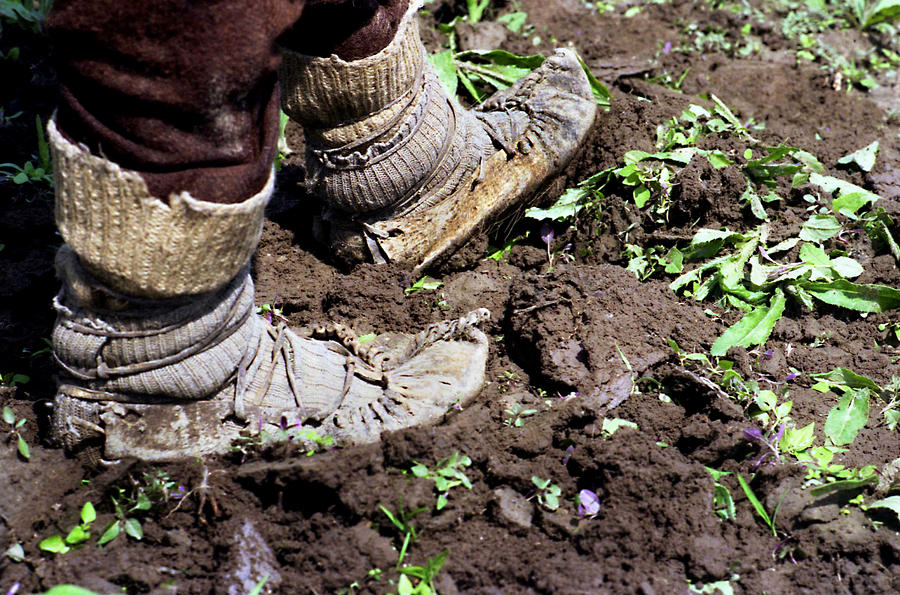
He compared peasant shoes with a well-known painting by Van Gogh of peasant shoes. He wrote of the shoes (and not the painting), “Everyone is acquainted with them.” (p. 32, “The Origin of the Work of Art,” in Poetry, Language, Thought) For my part, I had never seen peasant shoes, until I googled them:
Then I took a look at Van Gogh’s famous paintings at these shoes:
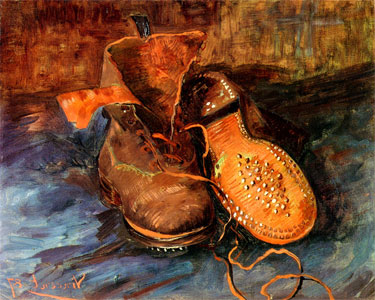
Although I can see similarities between the peasant shoes from google and Van Gogh’s peasant shoes, I was surprised to learn that Van Gogh’s shoes were probably a pair of peddler’s shoes.
What are peasant shoes? Has anyone seen them since – at least in the English speaking world – there haven’t been any peasants for centuries?
Philosophy is difficult in a world without pith and constancy.
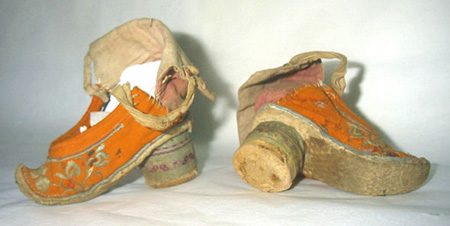
Update 18 July 2014 Thanks to a reader who goes by the moniker, Peasant Painter, for updating me and letting me know that the shoes below aren’t peasant shoes but ones used for Chinese foot binding.